
Prof.JingTao YaoUniversity of Regina, Canada Dr. JingTao Yao received a Ph.D. degree from the National University of Singapore. He is currently a Professor with the Department of Computer Science, University of Regina, Canada.
Dr. Yao serves as an Area Editor of International Journal of Approximate Reasoning, Special Section Editor of Cognitive Computation, and a member of Editorial Boards of various international journals. He is currently the Steering Committee Chair, a Fellow, and past President of the International Rough Set Society. He was a member of Canada NSERC Discovery Grant Selection Committees and Evaluation Groups: Computer Science from 2017 to 2020, and 2026. He has been a Chair or a member of the Program Committee of numerous international conferences and has edited many volumes of conference proceedings.
Dr. Yao’s research interests include machine learning, deep learning, federated learning, rough sets, data science, three-way decision, and Web-based support systems. He has over 180 refereed journal articles and conference papers published in these areas and has received about 8,000 citations according to Google Scholar. He has three highly cited papers (top 1%) and one hot paper (top 0.1%) according to Web of Science. Dr. Yao has been recognized as a top 90,000 (top 0.77%) scientist across all scientific fields over half century based a new standardized citation metrics developed by scientists led by Stanford University.
Title: Three-Way Clustering in Machine Learning: Methods and Future Directions Abstract: Clustering is a fundamental machine learning technique that organizes unlabeled data into groups based on similarity. In many real-world scenarios, however, it is difficult to confidently assign certain data points to a specific cluster. To address this issue, soft clustering introduces probabilistic membership, allowing a data point to belong to multiple clusters with different degrees of likelihood.
Three-way clustering is a modern extension of soft clustering inspired by the theory of three-way decisions. Instead of assigning a data point strictly to a cluster or excluding it, three-way clustering introduces a third option representing uncertainty. Specifically, each data point is categorized as belonging inside a cluster, outside a cluster, or in a boundary region indicating partial membership.
Existing three-way clustering methods can generally be divided into two categories: evaluation-based approaches and operator-based approaches. Evaluation-based methods rely on membership functions to estimate the degree to which a data point belongs to a cluster and then determine its three-way assignment. In contrast, operator-based methods construct three-way clusters from traditional hard (two-way) clusters using a pair of operators.
In this talk, we introduce and review representative three-way clustering techniques and analyze their key characteristics. We also briefly discuss the historical development of three-way clustering and outline several promising directions for future research.
|

Assoc. Prof. Shaolun HuangTsinghua Shenzhen International Graduate School, China Shao-Lun Huang received the B.S. degree with honor in 2008 from the Department of Electronic Engineering, National Taiwan University, Taiwan, and the M.S. and Ph.D. degree in 2010 and 2013 from the Department of Electronic Engineering and Computer Sciences, Massachusetts Institute of Technology. From 2013 to 2016, he was working as a postdoctoral researcher jointly in the Department of Electrical Engineering at the National Taiwan University and the Department of Electrical Engineering and Computer Science at the Massachusetts Institute of Technology. Since 2016, he has joined Tsinghua-Berkeley Shenzhen Institute, where he is currently a tenured associate professor. His research interests include information theory, communication theory, machine learning, and statistics.
Title: A Mathematical Theory to In-Context Learning
Abstract: In-Context Learning (ICL) has emerged as an important new paradigm in natural language processing and large language model (LLM) applications. However, the theoretical understanding of the ICL mechanism remains limited. This talk aims to investigate this issue by studying a particular ICL approach, called concept-based ICL (CB-ICL). In particular, we propose theoretical analyses on applying CB-ICL to ICL tasks, which explains why and when the CB-ICL performs well for predicting query labels in prompts with only a few demonstrations. In addition, the proposed theory quantifies the knowledge that can be leveraged by the LLMs to the prompt tasks, and leads to a similarity measure between the prompt demonstrations and the query input, which provides important insights and guidance for model pre-training and prompt engineering in ICL. Moreover, the impact of the prompt demonstration size and the dimension of the LLM embeddings in ICL are also explored based on the proposed theory. Finally, several real-data experiments are conducted to validate the practical usefulness of CB-ICL and the corresponding theory. |

Assoc. Prof. Ling LiuXidian University, China
Dr. Liu Ling is an associate professor at the Guangzhou Institute of Technology, Xidian University. He earned his bachelor's degree from Nanjing University (2008), master's degree from Peking University (2011), and Ph.D. from Imperial College London (2015), all in electronic engineering. He previously worked at Huawei Central Research Institute, where he was engaged in research on 5G polar codes. In 2019, he joined Shenzhen University as an assistant professor. In 2023, he joined Xidian University. His research interests include information theory, coding theory, lattice codes, and post-quantum cryptography. He has published more than 40 papers in journals and conferences such as IEEE TIT, TCOM, ISIT, and ITW. His recognitions include the IEEE WCSP 2021 Best Paper Award.
Title: Polar feedback coding: A novel framework for finite-length performance analysis Abstract: As is well known, polar codes are a coding scheme capable of achieving the Shannon capacity. Over the past decade, both academia and industry have been dedicated to improving their finite-length decoding performance, leading to the proposal of various decoding algorithms. This presentation will discuss how to enhance the decoding performance of polar codes in the presence of feedback. We will begin with a brief review of the classic SK coding, then introduce the details of feedback-based polar coding schemes and establish their connection with lossless compression. Ultimately, the probabilistic model of this method can accurately predict the bit error rate curve of SC decoding (without feedback). It is hoped that this report can offer new perspectives for the coding design and finite-length performance analysis of polar codes.
|

Assoc. Prof. Congduan LiSun Yat-sen University, China Congduan Li (Senior Member, IEEE) received the B.S. degree in electrical engineering from the University of Science and Technology, Beijing, China, in 2008, the M.S. degree in electrical engineering from Northern Arizona University, AZ, USA, in 2011, and the Ph.D. degree in electrical engineering from Drexel University, PA, USA, in 2015. From October 2015 to August 2018, he was a Post-Doctoral Research Fellow with the Institute of Network Coding, The Chinese University of Hong Kong, and the Department of Computer Science, City University of Hong Kong. He is currently an Associate Professor with the School of Electronics and Communication Engineering, Sun Yat-sen University, China. His research interests include networks, such as coding, security, wireless, storage, and caching. |

Assoc. Prof. Pengchao HanGuangdong University of Technology, China Pengchao Han is an Associate Professor at the School of Information Engineering, Guangdong University of Technology. She received her Ph.D. degree from Northeastern University, China, in 2021, supervised by Prof. Lei Guo. She was a visiting scholar at Imperial College London, working with Prof. Kin K. Leung. From 2021 to 2023, she conducted postdoctoral research at The Chinese University of Hong Kong, Shenzhen, in the group of Prof. Jianwei Huang. Her main research interests include mobile communication networks and edge computing, network optimization, distributed learning, and knowledge distillation. She has published more than 40 international academic papers. Among them, she has published 8 journal papers as the first/corresponding author, including in prestigious international journals such as IEEE Transactions on Mobile Computing, IEEE Communications Magazine, and IEEE Internet of Things Journal. She has also published 12 conference papers as the first author, including at IEEE INFOCOM, ICDCS, ICASSP, Globecom, and ICC. She received the Third Prize of the Liaoning Provincial Natural Science Academic Achievement Award in 2016, among other honors. She has served as a Technical Program Committee member for NeurIPS, ICML, and IEEE ICDCS, and has been a long-term reviewer for multiple journals and conferences such as IEEE Transactions on Mobile Computing, IEEE Transactions on Parallel and Distributed Systems, IEEE Internet of Things Journal, and IEEE International Conference on Communications. |
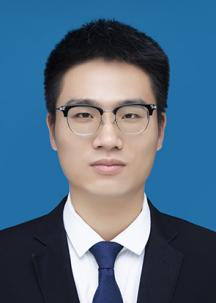
Mr. Zhongjun YangSun Yat-sen University, China Zhongjun Yang is currently pursuing the Ph.D. degree in information and communications engineering with School of Electronics and Information Technology, Sun Yat-sen University (SYSU), Guangzhou, China, under the supervision of Prof. Li Chen. His research focuses on the decoding algorithm of long polar codes. During his doctoral studies, he has published some excellent work in this field, including IEEE Transactions on Communications, IEEE Communication Letters, ISIT and ITW. One of his representative works is the “Improved Successive Cancellation Decoding of Long Polar Codes Through Perturbing A Posteriori LLRs and Its Theoretical Insights”. This work provides a significant breakthrough in facilitating perturbation-based decoding (PSC) for long polar codes. It first reveals that the PSC decoding can be equivalently interpreted as perturbing the a posteriori log-likelihood ratios (LLRs) of information bits. Therefore, perturbations are not restricted to being done on the received LLRs.
Title: Improved Successive Cancellation Decoding of Long Polar Codes Through Perturbing A Posteriori LLRs and Its Theoretical Insights Abstract: As is well known, polar codes are a coding scheme capable of achieving the Shannon capacity. Over the past decade, both academia and industry have been dedicated to improving their finite-length decoding performance, leading to the proposal of various decoding algorithms. This presentation will discuss how to enhance the decoding performance of polar codes in the presence of feedback. We will begin with a brief review of the classic SK coding, then introduce the details of feedback-based polar coding schemes and establish their connection with lossless compression. Ultimately, the probabilistic model of this method can accurately predict the bit error rate curve of SC decoding (without feedback). It is hoped that this report can offer new perspectives for the coding design and finite-length performance analysis of polar codes.
|